Tag: Dairy

Farming: It’s Worth the Fight

In his years at K-State, David’s favorite band was Cross Canadian Ragweed. They often played shows at Longhorn’s in Manhattan where he got the opportunity to meet lead singer Cody Canada, who would hang out with the crowd after the shows. Today, we often listen to Ragweed and other Red Dirt (that’s the genre) favorites in the milk barn.

Through our friend Carrie Mess, better known as Dairy Carrie, we’ve discovered Cody Canada’s new band – The Departed. They covered a song titled ‘A Little Rain Will Do” that really resonates with us right now, and yesterday they released a new single called “Worth The Fight”. It’s from their upcoming album Adventus due out in November.

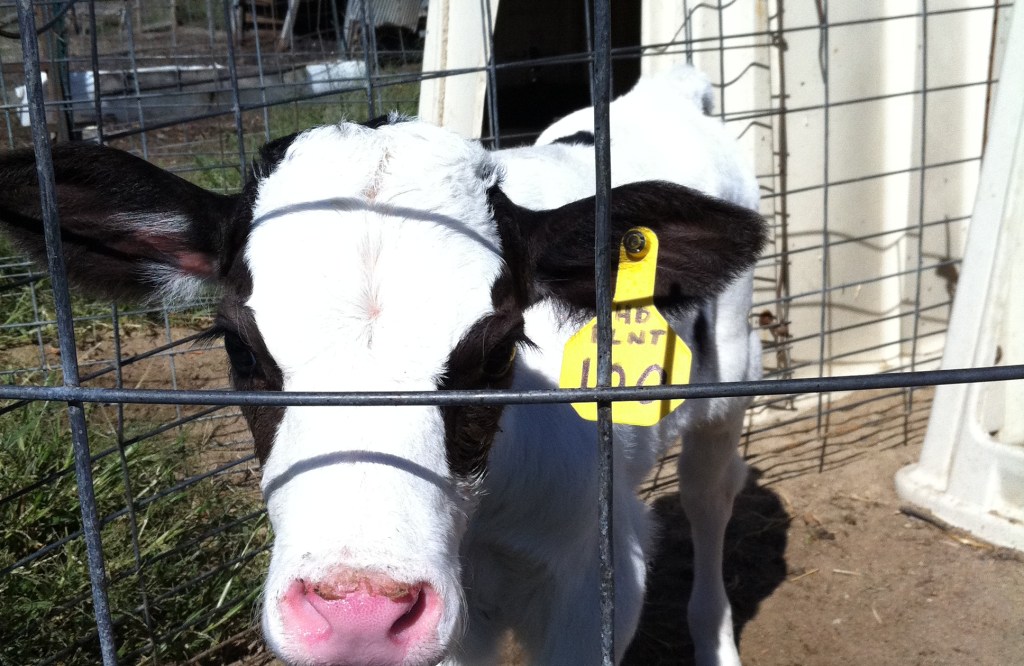
Adventus, a heifer calf – part of the future of our farm #WorthTheFight

Carrie blogs at www.dairycarrie.com and had this big idea (she’s known for her big ideas) to have fellow fans promote The Departed’s music along with what we think is worth the fight – Agriculture. You can read her post and find links to others on her site. You can also follow the twitter hashtag #worththefight.

Farming isn’t usually easy. Every single day we’re committed to looking out for the land and animals under our care. For David and I, it’s our heritage. Our families passed down the love for land and animals that we share. They taught us hard work and determination. We hope to someday be able to pass that heritage down, but to do that, we have to preserve it.

In our first year, we’ve faced a drought and a pricing imbalance. We’ve been discouraged at times, but we know we can’t give up. We’re proud of the land, the cows, and all that goes with it. We want to preserve the farm and way of life it allows us to live – for ourselves and future generations.

In addition to the weather, we have to battle misinformation. So often we hear things that aren’t true about our practices, or most other farmers’ practices. In the age of the internet, it doesn’t take long for information to spread, regardless of its accuracy, though. So many people today are several generations removed from the farm; less than 2% of Americans are directly involved in production agriculture, and many don’t know where to look for accurate information. That’s why we started this blog – we wanted to tell our own story. We’re not always perfect, but we try to always be honest.

In our area, houses dot the countryside. More and more, farms are being divided up and sold as residential lots. Farmers are supposed to feed the world, but here at home the amount of land available to do so is shrinking every day. We’ll keep doing our part to preserve the traditions handed down to us, striving each day to use less to make more. Hopefully, our hard work will pay off. Farming is our way of life, and we think it’s worth the fight.

What do you think is worth the fight?

Chopping Time

Silage chopping is underway! Chopping is the busiest and most important season for our dairy. I wrote about chopping rye this spring, but that task pales in comparison with this one. This time we’re chopping corn.

View from the chopper.

I’ve said before that corn silage is a big part of our cows diet. Chopping cuts up the whole corn plant – stalk, leaves, cobs (with or without grain) and all. Our silage is then packed and covered in pit silos. The end product is very efficient feed for our cows.

We only get one opportunity to chop corn silage each year, and the plants are only at the right moisture for a short time. We do stagger our planting to extend our window to finish, but it’s still a high stress time involving very long days.

Cleaning out the silo before filling it.

Typically we chop around 80% of our corn in late August or early September. Because we’re in a drought, the corn didn’t get as tall and has started to dry out faster. That means there will be less grain (quality) and less tonnage (quantity) than an average year. It also means we’re chopping in July for the first time in David’s memory, and we plan to chop 100% of our planted acres.

We ran out of corn silage about a month ago, so chopping early isn’t all bad. It was hectic trying to get the chopper, trucks, and dump box ready, though.  Also, I should note that I’m using “we” pretty loosely.  I’ve been working in Wichita and have contributed little other than moral support to the chopping effort.

Packing silage from above with the skid loader.

David’s cousin Jeff has been a huge help, running the chopper so David can get milking and chores done. Jeff also recruited his dad and other neighbors to help out driving trucks back and forth from the field to the pit silo. This also allows Dave to spend some time packing the silage – an essential part of the process.  David’s dad and our employee, Tyler, have also been logging extra hours.

Having a person to do each task (chopping, hauling, and packing) has made chopping significantly more efficient. We still have at least a week to go – we’ll keep you posted on our progress.  In the meantime, prayers for safety and sanity are appreciated!

Silo partially filled.

It’s Awefully Dry Around Here

Based on the title, I’m sure you’re expecting a post about the drought we’re currently experiencing. We could use some rain, bad, but that’s not what we’re talking about here.

During the afternoon milking on Saturday we dried off 14 cows of the 90 we milked that night. That’s over 15%. While that is a high percentage of cows, it’s not nearly the same percentage of milk. We also should have some cows coming fresh over the next couple of months to offset those we dried up.

Before I go too far, I should probably explain what dry-off means. I’ll start from the beginning. A dairy cow must have a calf before she can produce milk. After she calves, she will produce for several months without having another calf, but it’s important to get her “bred back” (pregnant) quickly because she won’t keep producing forever. The milking period after a calf is born is called a lactation (the first lactation occurs after she has her first calf, and so on).

The exact possible length of a lactation varies depending on the cow and several other variables. If we get a cow bred back quickly she will generally still be producing well, but at approximately 60 days before she’s due, we dry her off. If the cow has had a long lactation we will sometimes dry her off early because her production will drop on its own. DHIA testing has helped us better determine this.

Because of long lactations and also the effects of the summer heat, a few of the cows dried off this time were done early due to low production. All were within 90 days to calving though. There are exceptions to every rule, but in general it’s best for a cow to not be dry too long because the transition back to milking may be more difficult. It’s important for the cow to have a dry period so her energy can go toward her calf and regenerating her udder for continued production.

Drying a cow off involves giving her a couple of shots and injecting a dry-cow treatment into each quarter of her udder. The shots are vaccines that help keep both her and her calf healthy, and the treatments help prevent mastitis for her upcoming lactation.

After dry treating the cows we mark them as dry and haul them to a pasture where they’ll graze until they’re about 3 weeks from calving. At that point they’re moved to a maternity pasture where we can keep an eye on them and transition them back to the milk herd’s ration.

Probably the most exciting part of this particular dry-off was using our new (to us) truck and trailer to haul cattle for the first time!

Our cows’ sweet new ride!

Introducing: Heim Dairy Farm

This post is a little overdue since we made our debut in January, but better late than never, right? For those of you who may not already know us, you can read a little bit about who we are on the About Us page.

We are Jennifer and David Heim, and we operate a conventional dairy farm in Northeast Kansas (near Kansas City). Today, we milked 91 Holstein cows. The exact number of cows being milked varies somewhat frequently depending on dry-offs, freshening (calving), and other factors. We also keep all of our heifer (female) calves and raise them as replacements, and we raise crops, most of which are used as feed for our cows and calves.

I mentioned that we kicked things off in January, but I should note that cows have been milked here for a long time. David’s grandfather, Harold, bought this farm in 1941 and started milking cows not too long after. More recently the farm was owned and operated by David’s father and uncle, but his uncle had been looking to get out of the dairy, and as of January 1st David and I took over the business officially.

Harold and Martha Heim Home, 1944
This is a picture of a picture of our house as it looked when Harold and Martha purchased it.

Our dairy isn’t new, most of the buildings are old and in need of repairs. The barn at the top of the page is the “White Barn”, built in 1912. Our herd isn’t the latest and greatest in genetics, but we recently bred our first second-generation AI (artificial insemination) heifer. Our house was started in 1883, and added onto several times. It needs as much work as anything, and probably one more addition. That’s what this blog is about. Over the coming months and next several years, we are going to work on all of the above and share our story here. We’re excited for the challenges that lay ahead, and can’t wait to start seeing our hard work pay off.