Category: Cows and Crops

Farm Stories

After our snow day a couple of weeks ago, I sent a photo of our heifers walking along the lake to my manager at my off-farm engineering job. He included it in his weekly email to our department. A week later as I was getting ready to leave my office, filling up my water bottle before I headed home, a manager of a different department passed me and said “I saw a picture of your cows”.

He took a few steps, then stopped and asked me about the cows. He told me the story of his dad who used to haul milk, back when it was stored in cans. When he was a baby, his mother would ride along to open gates, and he would go too. He finished with something like “anyway, they love to tell that story.”

I’m really glad that he took the time to stop and tell me, and for some reason it really got me thinking. This isn’t the type of conversation that I normally encounter at work, and I have a lot of time to think during my 50 mile commute. Maybe this is something that should have been obvious, but finally it hit me: Farming is nostalgic to people who aren’t farmers.

There are some who felt the much-discussed Dodge Super Bowl ad didn’t accurately portray modern farming or modern farmers. However, most farmers I know loved it. Yes, farming has changed since Paul Harvey gave that speech in 1978, but maybe farmers aren’t so different. When the speech was given, farming innovation wasn’t new.

Bulk tank storage and the milk machine were already commonplace at that time. In fact, the milk barn we use today was already standing. Farmers have been looking for ways to improve efficiency, to do more with less, since long before 1978. However, I think many of us still cling to the values of our predecessors: honesty, integrity, and hard work. Farmers are nostalgic about farming, too.

Minnesota farmer Tim Zweber recently wrote this story about an old manure spreader that sits by their shop. And an Illinois farm wife wrote this post reminiscing about an old barn. I don’t think farmers are the only ones who enjoy these stories.

106acres.jpg
This was my great-grandparents farm in Illinois. The barns and house are gone now, but photos like this one help us remember and reminisce.

When we’re looking for the link between food and farm, maybe the nostalgia is where we connect. Maybe these farm stories are our common bond with those who left their farming roots behind. Just because we’re moving forward doesn’t mean we can’t look back.

Enhanced by Zemanta

So God Made A Farmer

The last time I watched social media “blow up” over a commercial was roughly a year ago over a Chipotle ad that aired during the Grammy’s. Many farmers, including us, felt that advertisement portrayed modern agriculture with an unfair negative bias. Last night during the Super Bowl, Dodge Ram ran an ad showing farmers in a different, more complimentary light. I shared the YouTube version on our Facebook page, and both my twitter and Facebook feeds were going crazy with comments about this ad. I do have a lot of farmer friends, but still this morning the general consensus seemed to be that Dodge did a great job, and people love Paul Harvey.

In 1978 Paul Harvey gave a speech to the national FFA convention. This speech has been used with various images on YouTube, and a portion of it was used for the Dodge Ram ad. His words ring true today. Here is the full text of the speech:

And on the eighth day, God looked down on his planned paradise and said “I need a caretaker” – So God made a Farmer

God said “I need somebody willing to get up before dawn, milk the cows, work all day in the field, milk cows again, eat supper then go to town and stay past midnight at a meeting of the school board” – So God made a Farmer

“I need somebody with arms strong enough to wrestle a calf and yet gentle enough to deliver his own grandchild; somebody to call hogs, tame cantankerous machinery, come home hungry, have to await lunch until his wife’s done feeding visiting ladies, then tell the ladies to be sure and come back real soon, and mean it” – So God made a Farmer

God said “I need somebody willing to sit up all night with and newborn colt, and watch it die, then dry his eyes and say maybe next year. I need somebody who can shape an axe handle from a persimmon sprout, shoe a horse with a hunk of car tire, who can make a harness out of hay wire, feed sacks and shoe straps, who at planting time and harvest season will finish his forty hour week by Tuesday noon and then, paining from tractor back, will put in another 72 hours” – So God made a Farmer

God had to have somebody willing to ride the ruts at double speed to get the hay in ahead of the rain, and yet stop in midfield and race to help when he sees first smoke from a neighbor’s place – So God made a Farmer

God said “I need somebody strong enough to clear trees and heave bales, yet gentle enough to wean lambs and pigs and tend to pink-combed pullets; who will stop his mower for an hour to splint the broken leg of a meadowlark. It had to be somebody who’d plow deep and straight and not cut corners; somebody to seed, weed, feed, breed, and rake and disk and plow and plant and tie the fleece and strain the milk and replenish the self-feeder and finish a hard week’s work with a five-mile drive to church. Somebody who would bale a family together with the soft, strong bonds of sharing; who would laugh and then sigh, and then reply with smiling eyes when his son says he want to spend his life doing what dad does” – So God made a Farmer

I have agricultural heritage on both sides of my family, as does David. Although I never intended to become a farmer, I have always been proud of that heritage. I am proud of the work done by generations that came before us, and I hope that those generations are proud of the work we are doing today.

Farming is not a job, it’s a life. And it is a life that many today are not willing to lead. Sunday afternoon while most people were icing their drinks and heating up their queso, we were setting up the barn for milking. We finished feeding our calves around 8:30 and headed inside. We sat down to dinner shortly before the advertisement aired. When we heard Paul Harvey’s voice, we both stopped eating and watched and listened.

firststeps.jpg
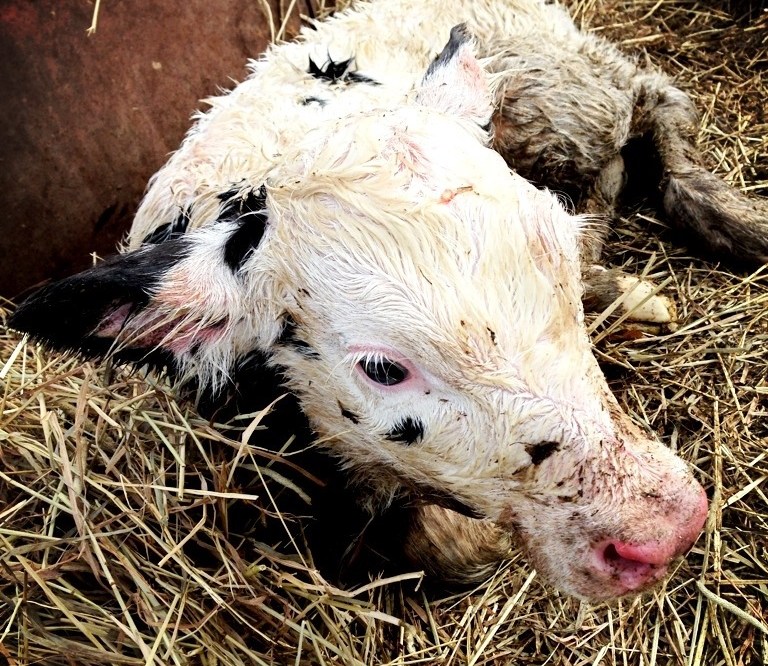
This was my view at 7 am Sunday morning, welcoming a new heifer calf to the world and a new fresh heifer to the milk herd.

We choose this life, and we feel blessed to lead it. However, sometimes when you’re cold and sore and tired, it’s nice to be reminded that someone respects or appreciates what you did today. But Dodge is doing a lot more than a one-time show of support for farmers like us. The “Year of the Farmer” campaign, kicked off with this ad, supports Future Farmers of a America (FFA). You may remember that we hosted our local FFA dairy judging team for some practice judging classes last fall. FFA is a great organization helping to introduce a new generation of Americans to agcriculture.

Paul Harvey’s words from 1978 say it all, and last night many people heard them for the first time. Thank you, Paul Harvey. Thank you, Dodge. And thank you, God, for making us farmers.

If you’d like to see what other farmers thought of this ad, CNN eatocracy posted about it today with links to several posts, many from friends of ours.
Enhanced by Zemanta

Winter Workload

This week the temperature started off with a high of 75 degrees on Monday. Once it started cooling off, it apparently forgot to stop. Friday morning the temperature was right around zero.  We’re used to getting cold weather; we’ve had a couple of days with single digit lows already this year.  It’s winter, so it’s okay.

The item of note isn’t the weather, but rather, the work the weather creates.  I’ve heard it said that farmers don’t work in the winter.  Clearly, those saying such a thing aren’t referring to dairy farmers since the cows still have to be milked twice a day every day, just like they do during the other seasons.

It’s true that in the spring, summer and fall there are additional activities like planting, putting up hay, and harvesting to fill the “free time” we aren’t spending milking or doing chores.  In the winter, though, there are still other additional activities to fill our time, especially when the weather turns wet and/or cold like it did this week.

Keeping Everything Warm and Healthy

We use straw for bedding for our cows and calves, and when it’s wet or cold, we have to freshen that bedding every few days to keep everybody warm and dry. We also have to spend extra time feeding and watering.  Young calves in particular need extra attention to ensure that the weather isn’t causing any illnesses like pneumonia. Keeping things consistent for our animals is important, but unfortunately the weather is out of our control and isn’t always consistent. We give the calves a little extra to eat during cold weather, and we don’t do anything drastic like weaning them (stop feeding them milk) right before a cold snap.

This picture is actually from 2011, but this mama was well-behaved and had her calf in a nice dry spot. Interestingly, that calf is now bred and in the same pasture she was born in.

Feeding Hay

The calf groups that aren’t on pasture get hay year-round, and the cows get their forages in their TMR. However, we keep dry cows, bred heifers and a couple of heifer groups on pasture.  During the warmer months (as long as it rains) they have grass to snack on.  Once the frost kills that grass, we supplement that part of their diet by delivering hay to their pastures.

Thawing Waters

We also spend a notable amount of time watering everything in the winter.  The milk herd and dry cows along with a couple of heifer groups have frost-free waters that make this process easy.  In extreme cold we do need to make sure the floats don’t freeze, but we haven’t had trouble with that this year. The rest of the calves have water sources that can and do freeze.  Our youngest groups have tubs filled with water and one group in a rented pasture has a small pond.  All of these water sources need to have the ice broken on them at least once a day every day in cold weather.

Maintaining Equipment

Equipment doesn’t like the cold either. Our milking and feeding equipment can all struggle in the cold.  During our first cold snap this winter, the heater in our milk barn wasn’t working.  We used a smaller heater to help ease the chill, but we still had to use warm water to thaw out the units before every milking.  We also have to use engine block heaters on tractors and our skid loader to make sure that they start.

Protecting Against the Elements

It seems like every daily task takes longer when the temperature drops.  Getting dressed in the morning takes longer with all of the layers required to stay warm.  Lugging around all of those layers also makes tasks slower and more tiresome.  And when it’s really cold, the farmers need breaks to warm up inside or near the exhaust of the skid loader.  The days are also shorter. We work both before and after dark, but some tasks can only be done, or are much more easily done, with daylight, and we have that much less time each day to complete those tasks.

So if you’ve ever wondered how we fill the time we don’t spend in the field during the winter, now you know.  We’re working hard to keep our animals and ourselves warm and healthy.

Dairy Does Beef

I’ve been having a bit of blogger’s block lately.  I have two or three unfinished posts on my jump drive, but instead of finishing one of those, today I decided that I better just start fresh.  Something I’ve wanted to do with this blog, but haven’t really yet, is comment on agriculture issues that I see in the news.  Today I saw a link on Facebook that included a graphic photo, along with a few comments. The friend who shared it posts a lot of interesting links related to agriculture, but it caught my eye that this one was from the Kansas City Star website. It’s ironic to me that a newspaper in a cow-town, who still prides itself on meat, is now spreading information targeted against the industry that essentially founded the city. To view the photo and accompanying featured articles, you can go to www.kansascity.com/beef. Remember, I warned you it was graphic.

In the comments was a link to a YouTube video featuring Dr. Temple Grandin.  Dr. Grandin is a well-known advocate of humane treatment and slaughter of animals and has done a lot of good for the beef industry. The video shows cattle being unloaded and handled and actually being slaughtered. After somewhat nervously deciding to watch it, I was pleasantly surprised at how comfortable I was with the process. It may seem a little extreme, and not for the faint of heart, but after seeing the process I actually feel better about the beef I eat.

The first thing I noticed about the KC Star photo is that every animal in it is a Holstein, which happens to be the dairy breed that we raise and milk.  Holsteins are the black and white cows used in most advertising and media that involve cows, regardless of whether the product being referenced is beef or dairy. Ironically, in any instance where I’ve seen public comments about Holsteins being used for beef, many insult their meat as being good for nothing but fast food hamburgers.

Personally, I think that’s pretty unfair. I’ve talked before about how many Holstein bull calves are raised for beef, and it would appear that this is the story of the steers in this picture. The beef that we eat at home is from bull calves that we keep, castrate, and feed out. In fact, one of the best steaks I’ve ever eaten was a filet from a Holstein steer. Holsteins are far from the most efficient cattle to be used for beef because of their large frames (and appetites), but when cared for correctly, they produce very high quality meat.

The majority of our bull calves are raised at other farms, though. We aren’t in the beef business at this time. I do, however, get questions regarding what happens to our cows at the end of their productive lives, and the answer is that most are sold for beef. Also, it is likely in the case of a milk cow that the animals will be used primarily for ground beef and byproducts, which is where Holsteins get the above mentioned reputation. This isn’t due to their level of care, but rather that something has caused them to not be profitable dairy animals, and most likely that same something (or maybe another something) has had an impact on their overall well-being, including the quality of their meat.

This week we sent five of our cows to a nearby auction. We love these animals, so why would we cull (sell) them?  There are many reasons, and this group is a great example.

One of them was a young cow who was almost sold much earlier for kicking in the milk parlor. She actually broke one of our employee’s fingers, but she milked pretty well and had calmed down some. However, during David’s one and only breeding attempt, she managed to crack his ribs. She did not become pregnant from that attempt, and we felt that it was not worth the risk of another attempt to keep her in the herd.  This is kind of a rare case, but safety of ourselves and our employees must always come first.

Two of these cows were older and had lost a lot of strength, particularly in their legs. We elected not to re-breed them after they calved because the risk was too high that they wouldn’t have the strength to carry a calf to term. Now late in their lactations, their milk production was no longer keeping up with the costs of feeding and caring for them.

The last two were average aged cows whose milk quality was not meeting standards. They had high somatic cell counts (a measure of white blood cells in their milk, indicating possible infection) and had each been treated for mastitis several times. Most likely this also means that they weren’t feeling well most of the time. Mastitis is uncomfortable for the cows.

It’s never an easy decision to make; we strongly dislike selling cows, but sometimes it’s the right thing for both the business and the animal.

I guess the point of my post is this: I truly believe that most farmers and agricultural professionals support and participate in the humane treatment and slaughter of livestock.

As for forming your own opinions, I simply ask that when you see stories like the one in the Kansas City Star that you look also to the other side, to farmers like us, but also to scholars and scientists like Dr. Temple Grandin. I would wager that Dr. Grandin has more education and more experience in the livestock industry than anyone involved in the KC Star’s project. She certainly has more education and experience than I do, and as a farmer, I trust her assessment of the improvements the industry has made.